


You're closing the books at 11:47 p.m., the dashboard is yelling at you, and someone just asked why payroll doesn't match the bank again. That's the moment most founders stop pretending the “we'll tidy it up later” accounting model is working. Remote accounting services aren't a workaround anymore, they're the operating system for teams that want clean numbers without building a mini finance department in every office.
The shift is real, and it's not just because people got used to Zoom. In the U.S., Bureau of Labor Statistics analysis of American Community Survey data found that remote work in finance and insurance jumped from below 17% in 2019 to more than 39% in 2021 (BLS analysis). That's a very loud signal. Finance work moved because the work itself could move, through cloud systems, digital documents, video calls, and secure access. If your business can already run payroll, bookkeeping, AP, tax prep, and reporting in software, pretending the team has to sit in one room is just nostalgia with a spreadsheet attached.
A growing company can have a sharp bookkeeper in one city, a controller in another, and a CFO working across several time zones. If the close still runs late, the problem is usually the workflow, not the map. Distributed finance gives smaller companies access to specialized talent without forcing every role into one local office.
A ledger does not become more accurate because someone reviews it in a conference room. Accuracy comes from clean access controls, documented processes, timely review, and clear ownership. A bookkeeper can reconcile transactions, a controller can review the close, and a CFO can forecast from different cities when the systems connect properly.
The practical gain shows up at month-end. A business can assign transaction cleanup during one team's workday, schedule controller review after that, and hand management reporting to the CFO with a complete audit trail. Each role works from the same cloud records instead of waiting for files, hallway decisions, or a single person to be available.
For startups and SMBs, finance talent can live where the skills are, while the company keeps routine work remote and reserves in-person time for tasks that need it. Distributed finance is the cleaner setup for many businesses, provided the operating discipline matches the model.
Practical rule: if the job already lives inside cloud accounting software, make remote delivery the default unless you can name a specific on-site requirement.
Remote accounting works best when the business already uses digital habits. Cloud bookkeeping, AP approval workflows, payroll tools, video meetings, and shared documents form the minimum operating base. Paper receipts, undocumented approvals, and hallway decisions will create problems anywhere. Remote work exposes those gaps sooner.
The right model also depends on the role. Routine bookkeeping and AP can often run through a distributed team. Controller review may need tighter overlap with leadership and stronger approval controls. CFO work benefits from scheduled access to current reports and direct conversations about cash, hiring, and risk. Matching each role to the right remote setup protects cost, compliance, and security.
Judge the arrangement by outcomes: faster closes, fewer errors, reliable reporting, and better decisions. If those results are missing, fix the process, ownership, or staffing model before blaming the location.
Remote accounting services cover the whole finance stack, not just bookkeeping with a nicer login screen. The mistake founders make is assuming “outsourced accounting” means one person categorizing expenses and vanishing into the cloud. That's baby-sitter thinking. Real remote finance can run from transaction cleanup all the way to reporting and planning.
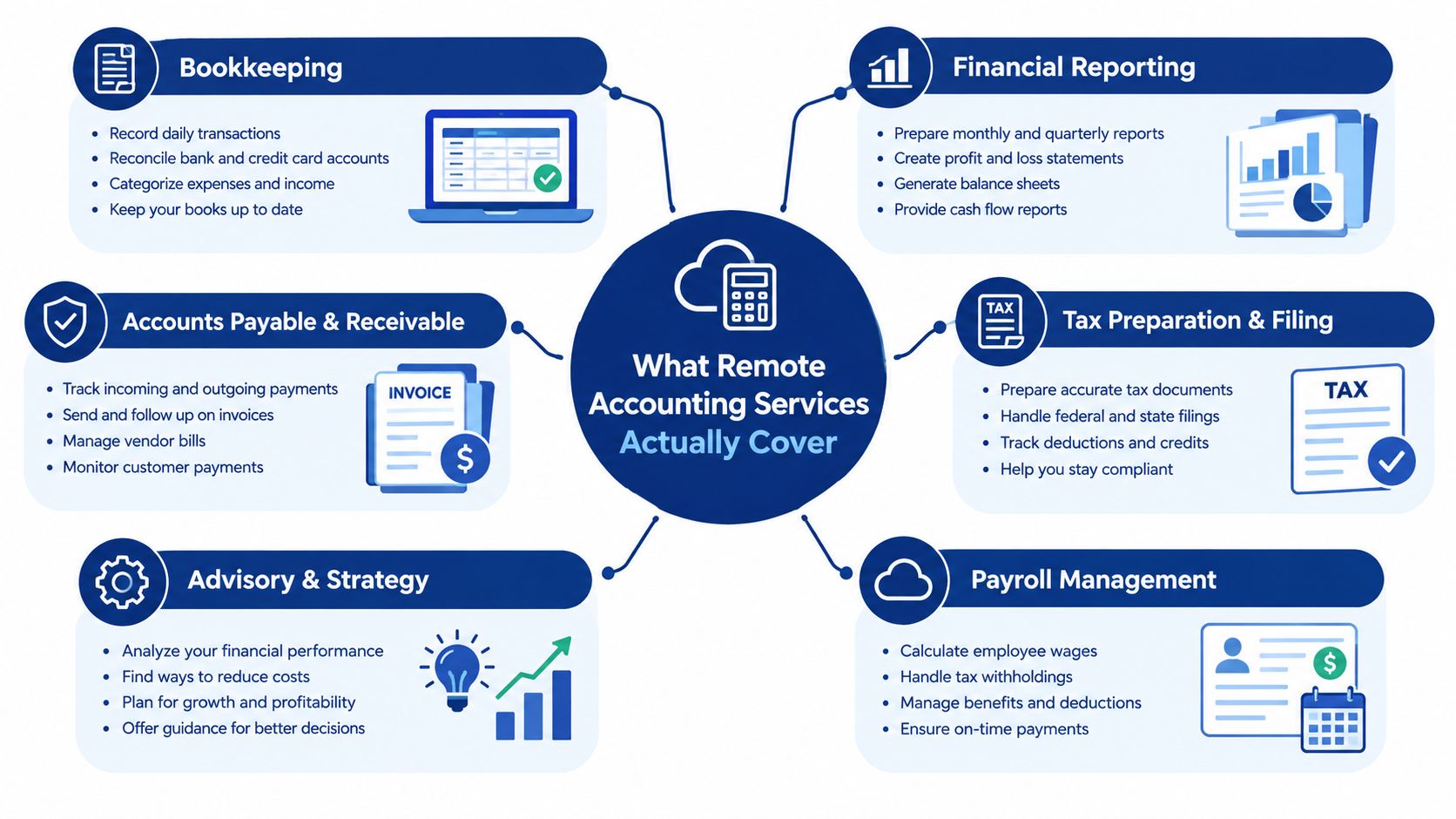
At the base level, remote accountants handle bookkeeping, bank and credit card reconciliations, accounts payable, accounts receivable, and payroll support. That's the stuff that keeps your books from becoming a seasonal panic attack. If you're late on categorization and reconciliation, your reports are fantasy literature.
From there, the scope can expand into financial reporting, month-end close support, cash flow tracking, and management packages. A good remote team doesn't just push transactions around. It gives you numbers you can use. That's the difference between “we have accounting” and “we have usable finance.”
Once the foundation is stable, remote support can extend into controller oversight, tax prep coordination, and FP&A. That last one matters more than people admit. Forecasting doesn't care whether the analyst is down the hall or three time zones away. It cares whether the data is current and the process is disciplined.
The market reflects that this is no niche hobby. One market estimate put global finance and accounting outsourcing revenue at approximately $58.4 billion in 2025, up from $41.8 billion in 2021 (market estimate). That's a mature service industry, not a side quest. Businesses aren't just buying cheap labor. They're buying access to capacity, specialization, and continuity.
If you want a clean breakdown of what full-cycle support can look like, the full-cycle accounting overview is a useful reference point. The basic test is simple. If the task can live in a system, be reviewed remotely, and be tied to a documented workflow, it can probably be handled off-site.
Founders often get sloppy here. They hear “remote accounting” and jump straight to “hire someone cheap.” Bad move. The right choice depends on control, continuity, and how much finance complexity you're carrying. Not every company needs a full-time controller, and not every problem should be solved with a project invoice.
| Model | Best for | Control level |
|---|---|---|
| Full time remote hire | Companies with steady transaction volume, close ownership, or multi-entity complexity | Highest |
| Part time remote hire | Startups and SMBs that need regular support but not a full seat | Medium |
| Outsourced service | Companies that need specialized help, overflow support, or a cleaner close without hiring internally | Lower to medium |
If finance is core to your operating rhythm, a dedicated remote hire makes sense. Think recurring closes, investor reporting, heavier AP, or a team that's already close to maxed out. A full-time person is easier to train into your process, easier to hold accountable, and better for roles that touch sensitive systems every day.
Part-time remote support is often the smartest answer for startups and smaller businesses. You get continuity without carrying a full seat. That matters when your accounting load is real but not yet large enough to justify a full-time employee sitting in the middle of your cash flow like a very expensive traffic cone.
Project-based outsourced support works best when the need is narrow. Cleanup, catch-up, specialized tax work, a system migration, or a close that's gone sideways are all good examples. It's also the right move if you're not ready to own recruiting, training, and management yet. The tradeoff is control. You get speed and expertise, but you need clearer scope and stronger review habits.
Rule of thumb: if you need daily context, hire a person. If you need a defined outcome, buy a service.
The outsourced accounting services page is useful if you're comparing service-style support with a more embedded hire. Don't overthink the label. Match the model to the workload, then move on before the month-end close starts throwing chairs.
Let's kill the fantasy that the cheapest rate is the cheapest option. That's how people end up buying a “deal” and financing rework, delays, and cleanup with their sanity. Remote accounting pricing is only useful if you compare the full cost of the seat to the output you get.
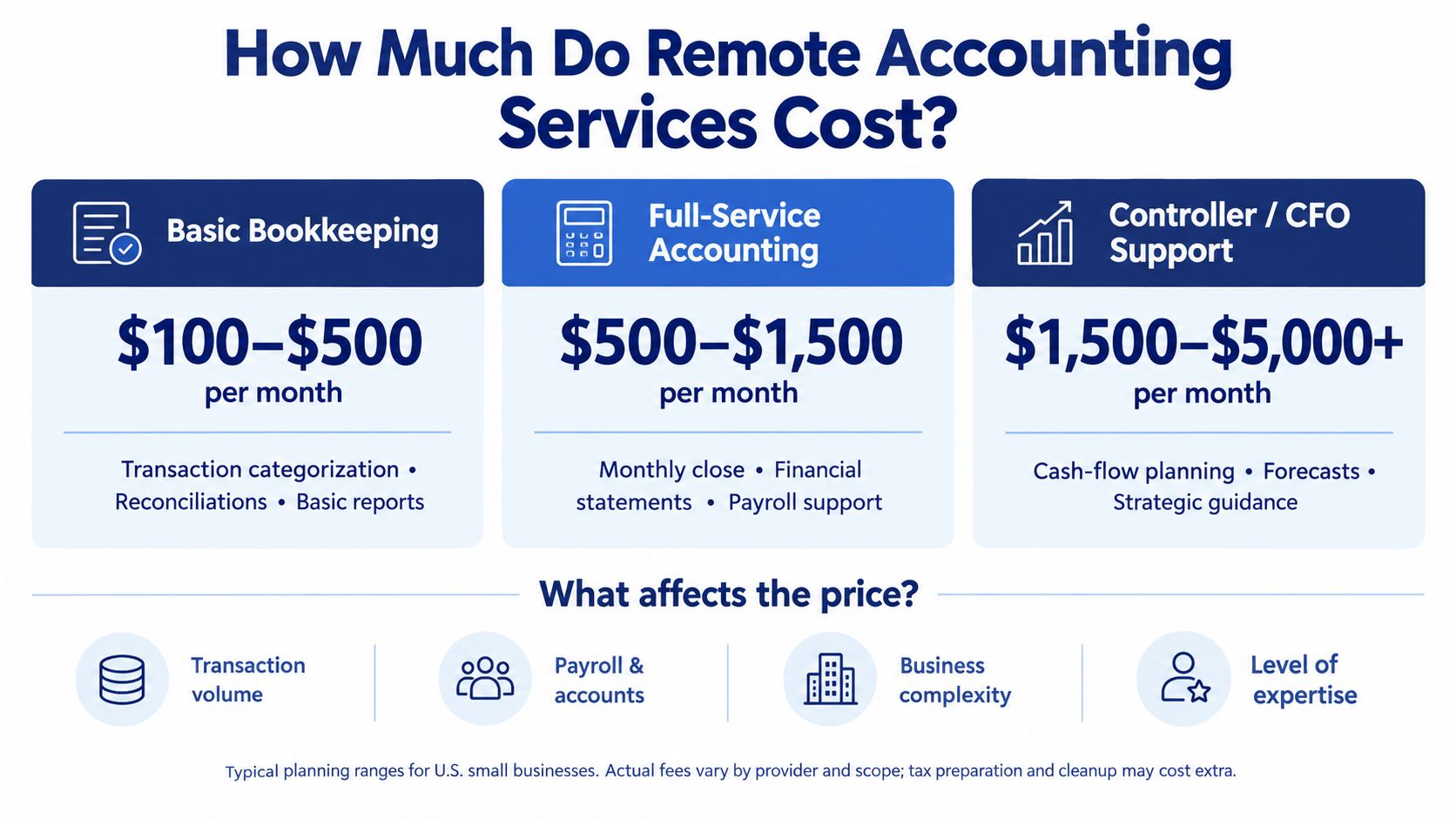
The U.S. Bureau of Labor Statistics reported 2025 median pay of $50,670 annually, or $24.36 per hour, for bookkeeping, accounting, and auditing clerks, while accountants and auditors had a 2025 median of $83,680 annually, or $40.23 per hour (BLS occupational data). Those are wages, not total employer cost. Once you add payroll taxes, benefits, recruiting, equipment, management time, and overhead, the comparison changes fast.
That's why asking “what's the hourly rate?” is a lazy question. Ask instead, “What am I getting closed, reviewed, and delivered?” A cheap bookkeeper who creates messy reconciliations is not cheap. They're a small, recurring disaster.
If you're pricing remote support, compare by deliverable, not vibes. Monthly bookkeeping, monthly close, clean reporting, AP handling, or controller review all have different values because they remove different amounts of work from your team. That's the part most founders skip because they want a tidy number. Tidy numbers are overrated when the books are dirty.
For a practical breakdown of service pricing logic, the article on how to set freelance rates is a smart companion read. It's not accounting-specific, but the pricing logic is useful if you're evaluating a contractor or service provider who doesn't want to price themselves into a corner.
A low monthly fee can hide onboarding drag, review cycles, and constant corrections. That's the classic expensive hello. You think you saved money, then you spend your afternoons fact-checking reports and explaining your chart of accounts to someone who clearly shouldn't be near it. If that sounds familiar, you're not buying accounting. You're renting friction.
If you want a more concrete list of line items to benchmark, the bookkeeping services price list is a good place to compare service scope against budget. Use it like a sanity check, not a shopping addiction trigger.
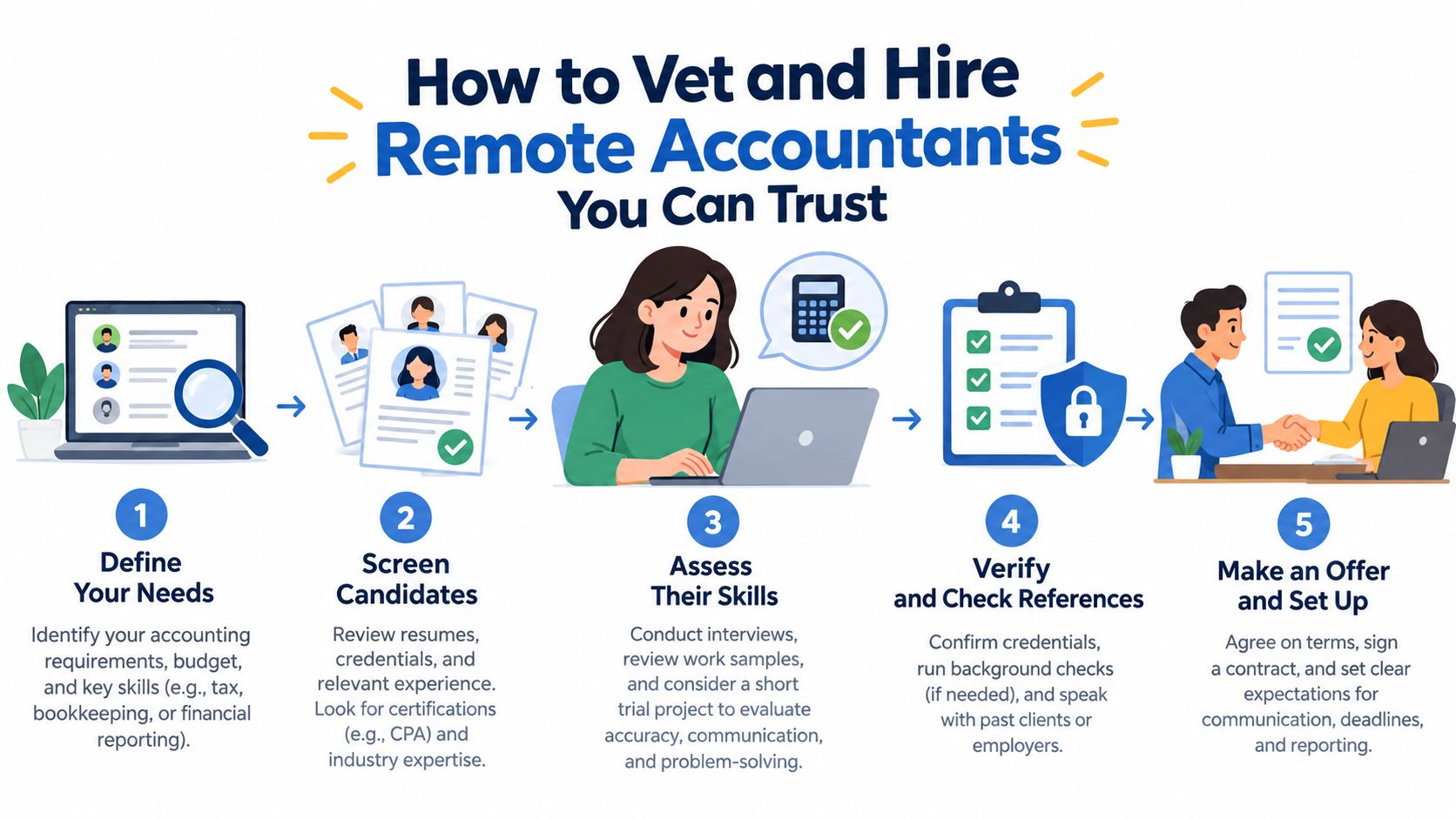
Resume-first hiring is how founders end up with polished nonsense. A beautiful PDF does not close your books. A credential doesn't automatically mean someone can handle your systems, your timelines, or your level of mess. Hire for the work in front of you, not the LinkedIn perfume.
The talent market is uneven. A 2025 Corporate Finance & Accounting Talent Study found that 53% of organizations reported no finance-and-accounting shortage, while 43% reported either minor or significant shortages (study PDF). The hardest roles were controller/assistant controller (34%), then bookkeeping/financial reporting (27%), accounts payable (22%), technical accounting (19%), accounts receivable (19%), and FP&A (18%). That's not a generic talent crisis. That's a role-specific mess.
So don't hire with a blanket “we need an accountant” brief. Decide whether you need transactional support, close oversight, technical judgment, or forecasting. Then screen for exactly that. A great bookkeeper can still be the wrong person for controller work, and a strong controller is usually overkill for expense categorization.
Ignore the endless interview circus. Give candidates a real task. Ask for a reconciliation sample, a month-end checklist, a reporting cleanup, or a small forecasting exercise. You'll learn more from 45 minutes of actual work than from two hours of polite storytelling and résumé aerobics.
Here's what I'd check before I'd trust someone with the books:
If a candidate sounds impressive but can't explain how they'd handle your month-end process, keep walking.
That's also where a platform like HireAccountants can fit if you want pre-vetted finance talent instead of starting from zero. Use the service as a shortlist accelerator, then still test the actual role. Convenience is nice. Blind trust is how people end up reconciling their mistakes at midnight.
A remote accountant shouldn't feel like a contractor in a black hole. If your team is scattered, the goal is simple. Make the rhythm feel local even when the seats aren't. That takes overlap, clarity, and just enough discipline to stop Slack from becoming a junk drawer.
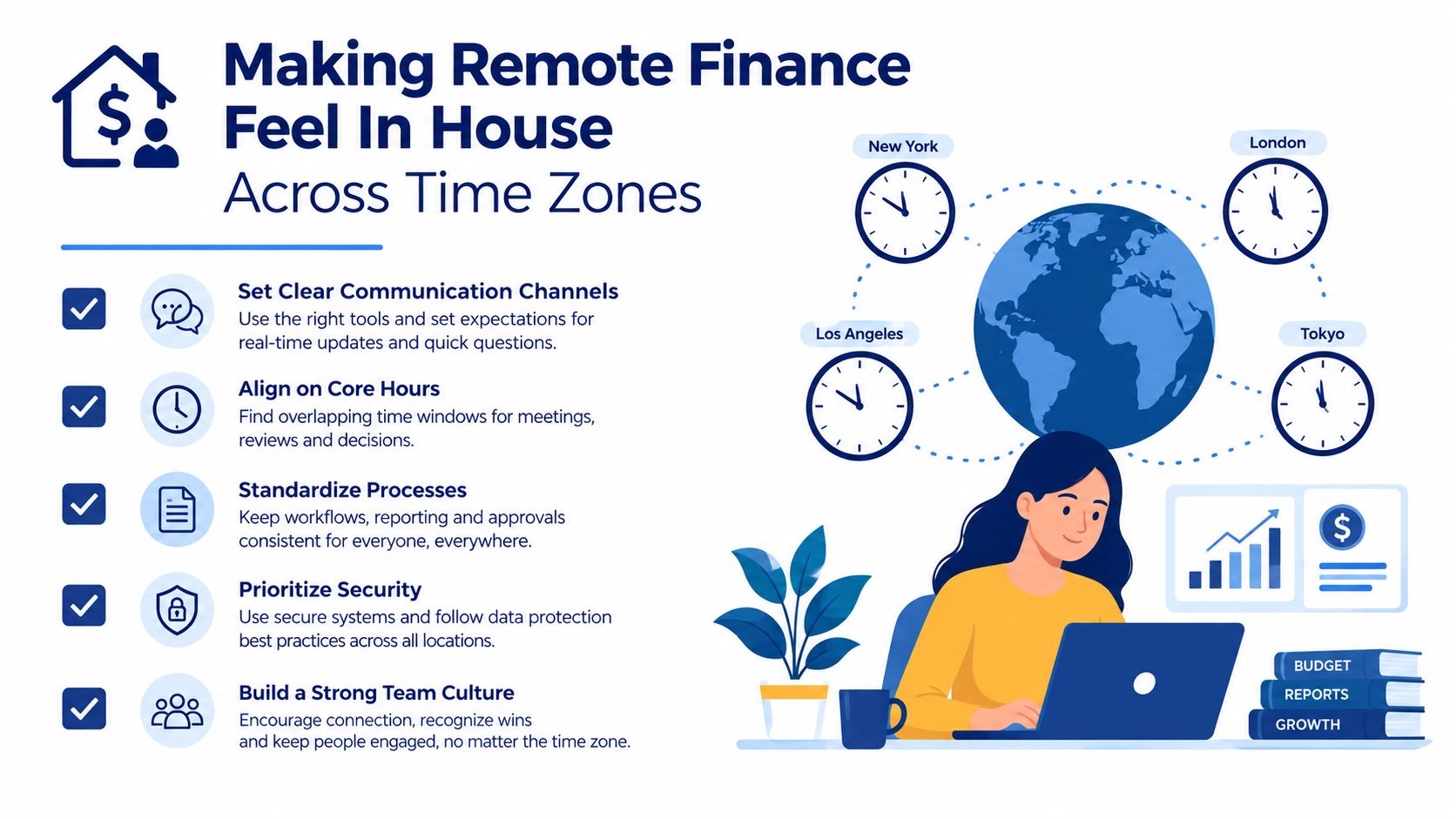
Start with a predictable cadence. Daily pings for blockers. Weekly review for open items. Monthly close meeting for actual decisions, not performance art. If the team knows when to expect feedback, they stop improvising and start operating.
Time zone overlap matters too. U.S. teams often work well with Latin America-based professionals because the schedules line up better than the old offshore model, which means fewer overnight handoffs and fewer “I'll get to it tomorrow” delays. That's not magic, it's logistics. Better overlap means fewer misunderstandings and less wasted calendar Tetris.
Use SOPs, naming conventions, and role-based permissions before anyone touches the ledger. If one person can see everything, you've already lost some of the security game. If nobody knows who approves what, your process will become a group project with bad attendance.
A clean onboarding rhythm looks like this:
For the operating environment itself, NIST advises securing all telework components, including laptops, smartphones, tablets, remote-access servers, and the internal resources reached through them. It also recommends WPA2 or WPA3, a VPN where provided, device PINs or biometric locks, and keeping devices patched (NIST telework guidance). That's the unglamorous part of making remote finance work. No one posts about device locks on LinkedIn, which is probably why so many laptops are still being treated like optional accessories.
The first 30 days should be boring on purpose. Set the calendar, document the workflows, confirm the contacts, and review every recurring report together. If the remote hire still needs constant rescue after a month, the issue is usually your process, not the geography.
One more thing. If the books can only run when the founder is in every meeting, you don't have a finance team. You have a founder-shaped bottleneck with a login.
Remote accounting gets dangerous when companies treat location like a side note. It isn't. When someone works from a different place, payroll withholding, unemployment insurance, workers' compensation, and state tax rules can shift with them. That makes remote work a compliance model, not just a staffing choice.
Put a simple rule in place before day one. Collect a location attestation. Require approval before a move or temporary work arrangement. Trigger payroll and tax review when the working location changes. And yes, separate employee, contractor, and employer-of-record arrangements if you hire across borders. Fast hiring is great. Fast hiring with no location governance is how people create expensive cleanup.
For teams that move around a lot, a practical travel connectivity setup can also help reduce chaos. If someone is working while crossing borders or bouncing between cities, tools like Simsima prepaid eSIM options can keep the connection stable without turning every trip into a tech support ticket.
NIST recommends authenticating every remote worker before granting access, then using authorization controls so each person can reach only the resources required for the job. It also recommends multi-factor authentication for both the telework device and the remote-access systems, plus cryptography to protect sensitive information (NIST access guidance). In plain English, don't give a remote bookkeeper the keys to the whole finance kingdom just because they need the bank feed.
Keep the rule simple. Role-based access, separate user accounts, tested backups, and audit logs that someone reviews. If a laptop disappears, you should know exactly what could have been exposed and exactly what gets shut off next.
Remote accounting works when it's boring in the right places. It should be fast in hiring, strict in access, and boring in the controls. That's the whole trick.
If you want help building a finance team that doesn't collapse at month-end, HireAccountants connects US companies with pre-vetted accountants and bookkeepers who can start fast. Use it to find the right remote role, whether you need cleanup, ongoing bookkeeping, or more strategic finance support without the usual recruiting circus.
Let's simplify your finances today!