


A new accounting hire shouldn't spend the first week hunting for passwords, reconstructing the chart of accounts, or guessing which reports matter. Yet structured onboarding is tied to retention, with employees who complete it reported as 69% more likely to stay for at least three years in a Society for Human Resource Management finding cited by accounting onboarding guidance. That makes preparation more than a polite welcome email. It's a financial control and a retention decision.
The best accounting onboarding checklist works like an operational launch. Before Day One, prepare the financial foundation, connect the data, grant controlled access, document the business, and define the close. Then align expectations, remove payroll and compliance friction, and turn the first 30, 60, and 90 days into visible performance milestones. No scavenger hunt. No “who owns this?” mystery novel.
Remote and Latin America-based hires can ramp smoothly, too, when working-hour overlap, payment, secure document handling, compliance support, and communication norms are settled before arrival. Use these business finance organization tips as a companion principle: organize the system before asking a new person to operate it.
Your chart of accounts is the skeleton key to the financial house. It gives the business a consistent way to classify assets, liabilities, equity, revenue, and expenses. If the structure is vague, every report becomes an argument about labels instead of a useful view of the business.
An e-commerce company might separate cost of goods sold, shipping, Shopify fees, and Amazon fees to understand channel economics. A SaaS company may create clear expense groupings for cloud infrastructure, customer acquisition, and payroll. A consulting firm might separate advisory revenue from implementation revenue across entities or service lines.
Start with your accounting platform's industry template rather than inventing an elaborate taxonomy from scratch. Keep account names plain, such as “Client Reimbursements,” and document why unusual accounts exist. Your future accountant shouldn't need to reverse-engineer your business from three years of vague “Miscellaneous” entries.
Plan for the next 12 to 24 months of growth without creating a museum of accounts nobody uses. Adding a sensible account later is easier than rebuilding historical reporting, but overengineering on Day One creates its own mess.
A clean CoA gives the hire a map. Without it, you're asking them to drive through town while you keep moving the street signs. For a practical explanation of the structure, use this guide to what a chart of accounts is. You can also keep a simple reference folder using this chart of accounts overview from Allied Tax Advisors.
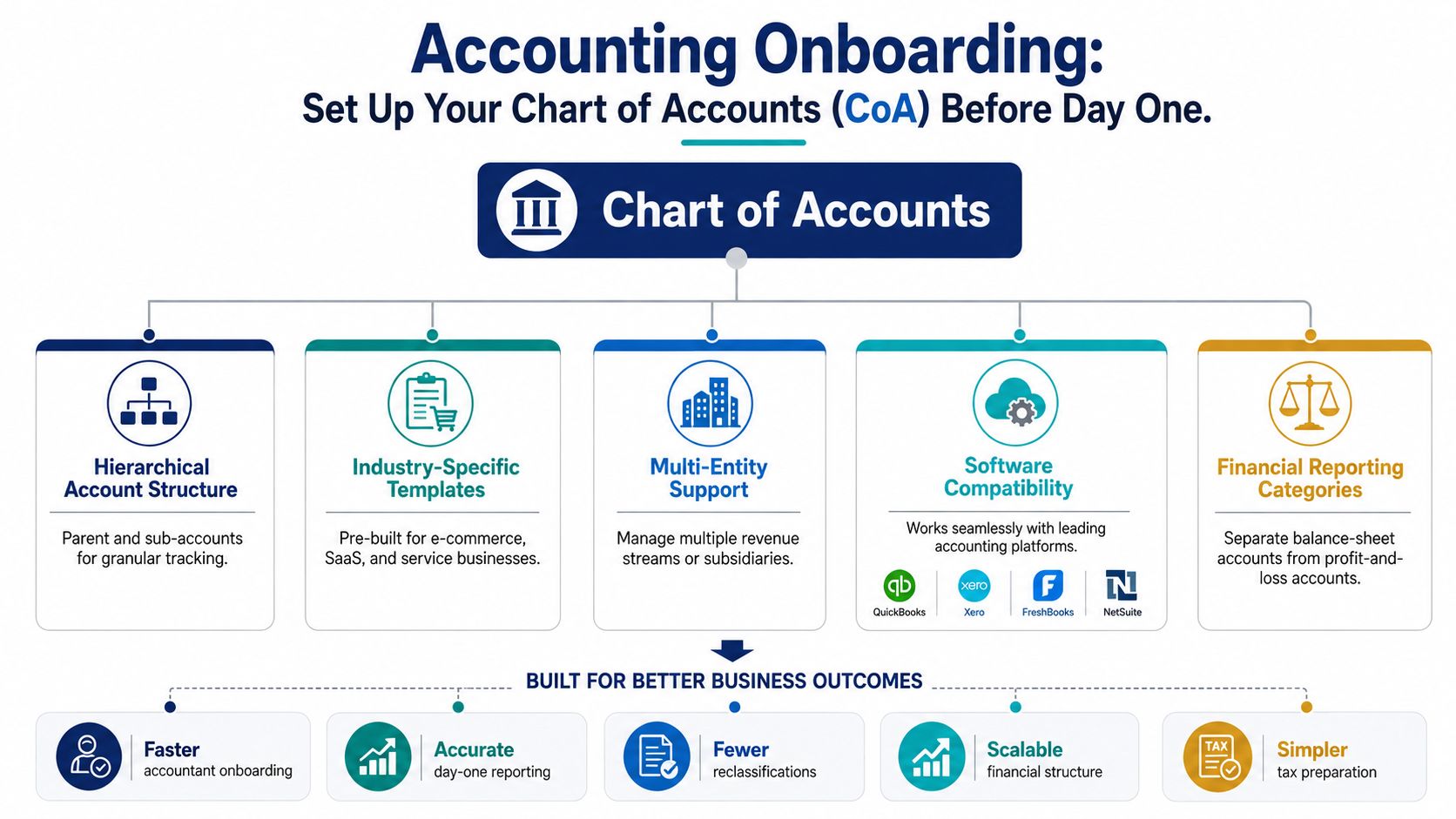
Your accounting platform becomes the finance team's daily operating system. QuickBooks Online, Xero, and FreshBooks can each fit a different business, but the wrong choice pushes work into spreadsheets, manual imports, and improvised reconciliation.
Start with the workflow, not the logo. A Shopify store may need QuickBooks Online connected to Shopify and Stripe. A SaaS business might prefer Xero with Stripe and customer-data integrations. A freelancer may get more value from FreshBooks for invoicing, time tracking, and straightforward bank synchronization. Match the platform to reporting needs, integrations, currencies, approval steps, and the accountant who will use it every day.
The cheapest subscription can become expensive when it creates duplicate entry or isolates data. Ask the accountant which systems they know well, then test the reporting dashboard and mobile experience yourself. A platform that looks impressive in a demo but slows down the close is a poor fit.
Choose one system and give it a defined setup owner. Before Day One, configure the company, users, account structure, reporting categories, integrations, and approval rules. Document those decisions so a remote accountant in Latin America is not guessing which settings are intentional and which were abandoned halfway through setup.
Use this short readiness check:
A tool choice is not complete when the subscription starts. It is complete when the accountant can enter the system, understand the setup, produce a report, and explain the handoff without founder intervention. Review this guide on how to choose accounting software before committing.
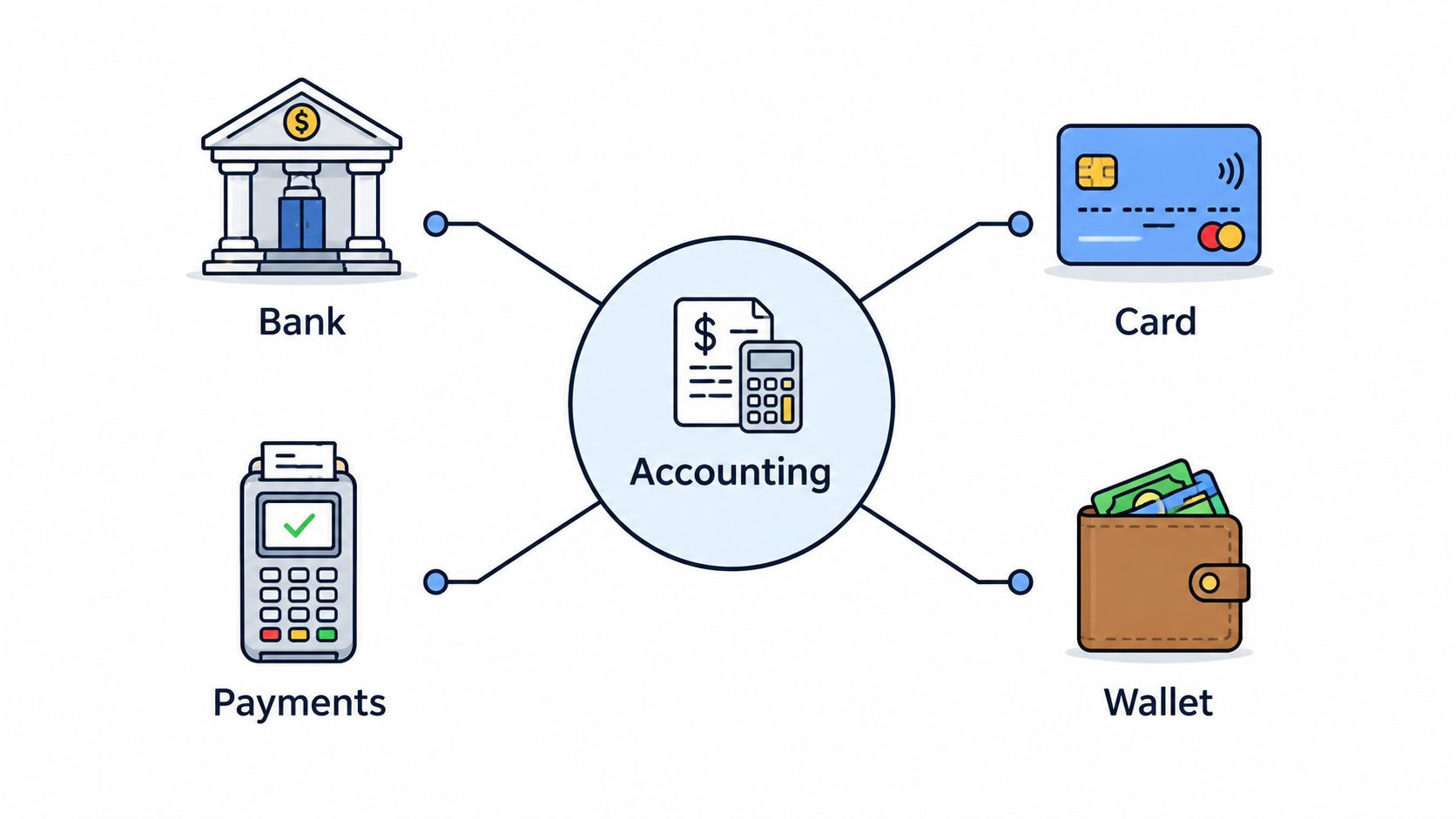
A clean handoff starts with complete transaction visibility. Connect every account that moves company money, including operating accounts, corporate cards, PayPal, Stripe, Square, Shopify Payments, and any other processor in use.
The common failure is selective setup. Someone connects the primary checking account, forgets a corporate card, or leaves a processor disconnected. The books then disagree with the bank balance, and the incoming accountant inherits a spreadsheet archaeology project.
Give every connection a working test before Day One. Run a transaction, confirm that it reaches the accounting system, and inspect its description, date, amount, and account mapping. A feed that technically connects but imports incomplete, duplicated, or poorly mapped data still requires repair.
Practical rule: If the business uses an account, include it in the review, even if it started as a founder's personal workaround.
Automation reduces manual entry. It does not replace review. Set matching and categorization rules with care, particularly for recurring expenses, card activity, transfers, refunds, and processor reserves.
Use account names that identify both purpose and entity, especially when several Stripe, PayPal, or bank accounts are involved. Categorize transactions with enough detail to support review, such as “Advertising, Google Ads” rather than “Amex charge.” Revisit rules when vendors, products, or spending patterns change. Record exceptions so a remote accountant in Latin America can distinguish an unusual owner contribution from an ordinary transfer without waiting for a meeting.
The test is operational: can the accountant trace a transaction, understand its mapping, and investigate a variance without asking the founder to reconstruct the history? Follow a deliberate accounting software integration process and complete that test before handoff. The goal is interpretable data, not a dashboard full of activity.
Your accountant should never have to infer what business they are entering. Software records transactions, but it cannot explain whether the company is an LLC taxed as an S-Corporation, a partnership, or a corporation. It also cannot identify ownership, capital contributions, foreign income, real estate holdings, or a recent restructuring without documentation.
Prepare a one-page Business Structure Cheat Sheet before Day One. Record the legal entity name, operating name, ownership, tax status, industry, related entities, major obligations, and unusual facts that could affect bookkeeping or tax work. Keep operating agreements, cap tables, shareholder documents, prior returns, and formation records with it in a secure shared location.
Use the sheet to explain how the business operates:
These records explain why money moves as it does. They also give a remote accountant in Latin America enough context to work across time zones without turning every classification question into a meeting.
Update the cheat sheet after a new partner joins, ownership changes, an entity is formed, or a tax election is made. Planned financing or restructuring should reach the accountant before documents are signed. Otherwise, the organization chart and books can start describing different businesses.
Assign one owner for document maintenance, set a review point around major corporate changes, and keep the current version clearly identified. A competent accountant can clean up incomplete records. They cannot responsibly guess the company's legal and tax structure. The founder's job is to make those facts available before entries begin.
Access should be useful, limited, and tied to a real person. A shared administrator login may save minutes during setup, but it removes accountability and makes every later review harder.
Create a named user with role-based permissions. A bookkeeper may need to enter and reconcile transactions without changing payroll settings. A tax accountant may need to review and import records without editing the live books. A finance leader may require broader reporting access, with two-factor authentication and clear ownership still in place.
Remote collaboration raises the stakes. An accountant working from another country or time zone may never share your office, so written permissions, device requirements, password practices, MFA, and escalation rules must carry more of the operational load. Document those expectations before access is granted, not after the first unusual login.
For a plain-English explanation of role-based access control, see SigFinch on access control. The right accountant won't need every key to do excellent work. They need the right keys, clearly labeled.
Access is part of the operating launch, not a welcome gesture. Set it up, test it, and record who owns each permission before the books become active.
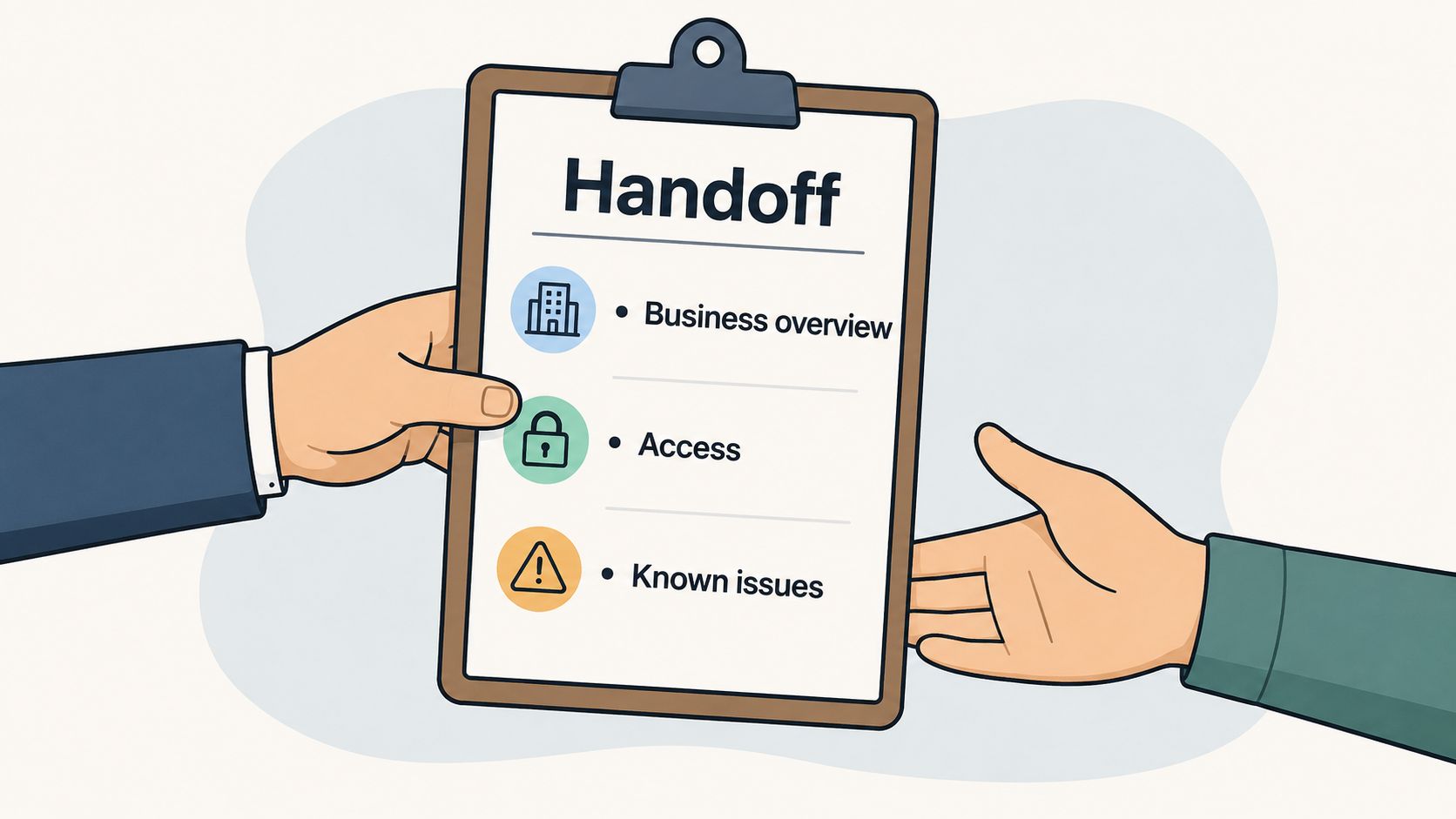
A new accountant is learning the business, the systems, the people, and the financial history at the same time. A focused handoff document prevents the founder from repeating the same explanation across meetings and gives the hire a reference when the inevitable “why does this transaction look strange?” moment arrives.
Keep it scannable, not encyclopedic. Start with what the company sells, how it bills, where cash comes from, how revenue behaves, what costs matter, and who owns each finance task. Then explain the quirks. A SaaS company may recognize annual enterprise contracts over time, exclude free trials until conversion, and carry refund anomalies from a prior outage. An e-commerce business may need inventory valuation, marketplace splits, returns, and a note about a historical system migration.
The handoff should explain the business model and the financial model in the same document. Add the billing tools, payroll owner, tax preparer, banking relationships, close calendar, recurring adjustments, approval chain, and escalation contacts.
The best handoff document answers the question behind the question: “How does this business actually make and spend money?”
Walk through the highlights together on the first or second day. The accountant should leave knowing where to dig deeper, who can answer what, and which historical oddities are business reality rather than bookkeeping errors.
A reliable close turns accounting from monthly cleanup into an operating control. Set the cadence, owners, inputs, review points, and definition of done before the first cycle begins. The accountant should reconcile accounts, review aging, post accruals and adjustments, investigate unusual activity, and confirm that reports match the business.
Monthly is a practical starting point for many small and midsize companies, but the work differs by model. SaaS teams may monitor operating metrics more often while reserving formal adjustments for month-end. E-commerce requires attention to merchant settlements, inventory, refunds, and shipping. Consulting firms may focus on project profitability, billable hours, and work delivered but not yet invoiced.
“Close by the fifth” is not a process. Assign each input and review to a named owner, with a due date and backup contact. Include time for transactions to settle, especially across remote teams and Latin America time zones. If receipts, payroll data, or processor reports arrive late, the deadline is theater.
Use a compact pre-close checklist covering:
Record recurring adjustments, including depreciation, revenue recognition, and payroll accruals, with the owner, source, and review rule. Nobody should rediscover the same entry every month.
Start with a stable process, not a decorative calendar. If the books are messy, identify blockers, assign fixes, and measure whether reports arrive complete and on time. Tighten the schedule after the inputs become dependable. The checklist is a control mechanism, not a punishment.
The first sync meeting sets the accountant's operating brief. The practical question is simple: which financial information will help leadership make better decisions? An accountant can process transactions without that context, but useful finance support requires a clear definition of “useful.”
Bring the handoff document, current business priorities, reporting calendar, and metrics already used in leadership discussions. A SaaS company may track recurring revenue, churn, customer acquisition costs, and cash burn. An e-commerce brand may need product-level profitability, while a consulting firm may focus on utilization, project margins, and partner distributions.
Keep the first reporting package deliberately small. A report earns its place when it supports a decision about hiring, pricing, inventory, fundraising, tax planning, or cash management. A remote team should also agree on where the source files live and how quickly questions receive a response, including the overlap available with Latin America-based collaborators.
Write down the reporting owner, delivery timing, recipients, escalation route, and definition of an urgent issue. Specify whether leadership needs a rolling cash forecast or whether accurate monthly profit and loss reporting is sufficient for now. The choice can change, but undocumented expectations create avoidable rework.
Use the meeting to settle four items:
Assign a measurable first milestone, such as delivering the agreed reports on schedule and documenting unresolved data issues. Then give the accountant room to challenge weak assumptions and surface uncomfortable facts. No trust falls required. Clear ownership and useful outputs are how the partnership starts.
Payroll and compliance errors can stall a strong hire before the first month is over. Before the first invoice or payroll run, confirm worker classification, engagement terms, required paperwork, payment timing, approval ownership, and compliance responsibilities.
For remote and Latin America-based hires, document location-specific requirements as well. Agree on overlap with US working hours, the payment process, secure document routing, local compliance support, and communication norms. An urgent approval should never depend on guessing between email, Slack, and a project system.
Write down who approves hours, invoices, reimbursements, payroll changes, and access requests. Name the HR, payroll, and compliance contacts, then map the handoff between the accounting lead, payroll owner, and external tax preparer. This prevents sensitive work from sitting in an undefined queue.
Use a short control list:
Record the first payment-cycle checks and their owners. Confirm that access, approvals, documents, and support contacts are ready before work begins. For distributed teams, include the agreed response window and working-hour overlap in the same record.
Security and compliance belong inside onboarding because they determine whether the accountant can operate safely from the first payment cycle. Clear ownership also makes the runway measurable: missing documents, unresolved access, and late approvals become launch blockers, not surprises.
A new accountant should not spend the first quarter guessing what “good progress” means. Set measurable ownership targets before the start date, then use them to remove blockers quickly.
Match the milestones to the role. A bookkeeper's first 30 days can cover connected-account validation, chart-of-accounts training, categorization exceptions, and the close map. By 60 days, recurring reconciliations and agreed reports should run with limited supervision. By 90 days, the bookkeeper should own the core checklist and flag meaningful variances.
A financial analyst needs a different ramp. Early work may focus on the reporting model and source data. Later targets can include delivering the agreed KPI pack, improving a forecast workflow, and explaining variance drivers clearly. For a remote hire, include dependable overlap with US hours, written updates, and confident use of the escalation process. Those expectations matter even more when the team collaborates across Latin America and the United States.
Use time to independent productivity and assessment pass rates to judge whether training is working, rather than relying on positive meeting feedback. The framework includes a two to three week benchmark for bookkeepers and an 80% or higher threshold at each assessment gate. It also tracks role-based ramp-up and retention during the first 90 days.
Put the evidence in the checklist:
Keep reviews brief and action-oriented. Assign an owner to each blocker, such as missing documentation, an unresolved permission, or a delayed approval. If the starting books are worse than expected, revise the milestones and record why. Honest adjustments produce a better ramp plan than forcing clean targets onto messy records.
| Item | Implementation Complexity | Resource Requirements | Expected Outcomes | Ideal Use Cases | Key Advantages |
|---|---|---|---|---|---|
| Set Up Your Chart of Accounts (CoA) Before Day One | Medium–High (requires design & business mapping) | Time from owner/accountant; industry template; accounting software | Granular, scalable financial reporting from day one; fewer reclassifications | Scaling businesses, multi-entity, e-commerce, SaaS | Faster onboarding; accurate reporting; tax-ready structure |
| Choose Your Accounting Software (and Actually Commit to It) | Low–Medium (selection + possible migration) | Subscription cost; 4–8 hours setup; integrations | Centralized transactions and real-time access for accountants | Businesses needing cloud accounting and many integrations | Real-time sync; accountant familiarity; automation |
| Sync All Bank Accounts, Credit Cards, and Payment Processors | Low–Medium (multiple authentications) | Bank connectors; time to test; occasional CSV imports | Real-time cash visibility; faster reconciliations; fewer manual entries | High-transaction businesses, marketplaces, omni-channel sellers | Eliminates manual entry; immediate cash position; error detection |
| Document Your Business Financial Structure (Entity, Ownership, Tax Status) | Medium (gathering legal and tax docs) | Legal documents, past tax returns, cap table | Correct tax treatment, compliance, informed tax planning | Companies with investors, multi-entity or cross-border operations | Prevents costly mistakes; enables tax strategy; clarifies ownership |
| Grant Access and Define Permission Levels for Your Accountant | Low (configuration + policy decisions) | Admin time; platform roles; 2FA/password manager | Secure, auditable access with appropriate scope of work | Remote hires, external accountants, multi-user systems | Security; accountability; easy offboarding |
| Create a Handoff Document: What They Need to Know on Day 1 | Low–Medium (focused documentation) | 1–3 hours; shared doc platform (Google/Notion) | Faster onboarding; fewer clarifying questions; documented processes | New accountants, remote hires, complex operations | Speeds ramp; preserves institutional knowledge; reduces interruptions |
| Establish a Clear Financial Close Process and Schedule | Medium (process design, coordination) | Checklists, templates, calendar, team coordination | Faster, consistent month-end closes and reliable reports | Growing companies, GAAP reporting, FP&A needs | Speed; consistency; improved audit readiness |
| Schedule Your First Sync Meeting and Align on Goals, KPIs, and Reporting Cadence | Low (one structured meeting) | 60–90 min meeting; KPI inputs; reporting preferences | Aligned expectations; targeted reports; proactive finance support | Businesses seeking strategic finance partnership | Focused reporting; accountability; proactive insights |
| Build the Payroll, HR, and Compliance Runway | Medium–High (legal and regional complexity) | Employment docs, payroll system, compliance contacts | Timely payments, correct classification, compliance adherence | Remote/international hires, teams with payroll | Prevents payment delays; reduces compliance risk; clear ownership |
| Turn the First 30, 60, and 90 Days Into Milestones | Low–Medium (planning and reviews) | Milestone plan; manager time for check-ins and feedback | Measurable onboarding progress; early issue detection; role ownership | All hires, especially remote accounting roles | Measurable ramp; fair feedback; faster ownership |
The checklist succeeds when the new hire can operate the finance function without guessing. They have the right legal and tax documents, secure named access, connected bank and payment data, a usable chart of accounts, a documented handoff, and a close process that says who does what by when. Payroll, HR, compliance, payment approvals, and remote collaboration aren't afterthoughts sitting in someone's inbox. They're part of the launch plan.
Run a pre-Day-One access test. Log in with the new accountant's permissions and confirm they can reach the systems they need without receiving authority they don't need. Test bank feeds, payment processor connections, document folders, reporting dashboards, MFA, and the escalation path. A five-minute test can expose a missing invitation, an expired connection, or an approval bottleneck before the hire encounters it live.
Hold the first alignment meeting early, after the accountant has reviewed the handoff document but before they disappear into transaction work. Agree on the reports leadership will use, the close cadence, the first priorities, and the definition of a successful first month. Then put the 30-, 60-, and 90-day reviews on the calendar. If they aren't scheduled, they'll be displaced by something louder.
For companies that need talent quickly, HireAccountants offers pre-vetted accountants and finance professionals across bookkeeping, tax, audit, analysis, and accounting management. Its model combines a self-service marketplace, recruiting support, AI matching, and complimentary HR, payroll, and compliance support. That combination can be particularly useful when a US company is onboarding a remote Latin America-based accountant and wants the working hours, communication, payments, and compliance handoffs organized from the start.
The practical test is simple. Can the accountant complete the close, explain the numbers, identify what looks wrong, and tell you what deserves attention next? If yes, the onboarding did its job. If not, don't blame the hire first. Check the launch plan.
Preparation is cheaper than reconstructing a quarter of books after the fact. It's cheaper than chasing missing documents, untangling shared logins, explaining mysterious transfers, and discovering that everyone had a different definition of “done.” Make Day One boring, give the accountant a clear operating system, and let performance become visible instead of theoretical.
If you need accounting or bookkeeping support, HireAccountants connects US companies with pre-vetted finance professionals, including remote Latin America talent aligned to US time zones. Visit the platform to find a specialist and simplify the access, handoff, milestone, HR, payroll, and compliance work behind a stronger accounting onboarding checklist.
Let's simplify your finances today!