


Most advice about below-the-line cost starts with a definition and ends with a headache. It tells you which expenses belong in the bucket, as if every company draws the same accounting line. That's how founders compare ratios that were built from different rules and then wonder why the numbers don't tie.
The sharper answer is this: below the line is a reporting-purpose choice, not a fixed accounting category. You choose the line based on the decision in front of you, then document it and apply it consistently. A unit-economics review, a lender conversation, and an investor update don't need the same view of the P&L.
Practical rule: Never say an expense is below the line without also saying where your line sits.
Introductory accounting guides often present below-the-line cost as a single universal subtotal. Two conventions compete in practice. One places the line at gross profit, putting rent, administrative salaries, utilities, interest, and taxes below it. Another keeps ordinary operating expenses above the line and reserves “below the line” for financing costs, impairments, restructuring, discontinued operations, and other unusual items. Investopedia's explanation of above-the-line and below-the-line costs captures the ambiguity. Treating either convention as universal creates a reporting problem.
The problem shows up in management meetings and lender reviews. Your company may classify rent and bookkeeping as below-the-line operating costs. A peer may use the same label only for interest, taxes, and exceptional charges. Compare those ratios without reconciling the classifications, and you are not comparing businesses. You are comparing chart-of-accounts rules with identical labels.
For management reporting, start with the decision the report must support. To test whether a service generates enough contribution after direct labor and materials, use a contribution-margin view. To explain operating discipline to a board or lender, use operating profit. To help investors judge sustainable earnings, separate recurring costs from exceptional items.
Use this three-line decision rule:
The classification is not the mistake. Leaving the purpose unstated is.
A company can report a healthy gross margin and still produce weak net income when overhead grows faster than revenue. Founders often celebrate delivery efficiency while overlooking the administrative machine beneath it. The business may execute customer work well and still spend too much on facilities, software, support staff, financing, or duplicated processes.
Startups should document which line they're using, why they're using it, and who will rely on it. Put that policy in the chart of accounts and apply it consistently across periods. A P&L should explain the business clearly, not force lenders, investors, and operators into an argument over labels.
Under the most common convention, the line sits at gross profit. Revenue comes in, direct costs leave, and the remainder is gross profit. Costs that don't directly trace to producing the good or delivering the project then chip away at operating profit and, eventually, net income.
That typically includes facilities rent, administrative salaries, bookkeeping, insurance, office technology, utilities, and certain selling expenses. The construction-finance explanation of above-the-line and below-the-line costs makes the distinction concrete: labor and materials permanently installed in a job are direct, while rent and bookkeeping are indirect because they don't become part of the completed project.
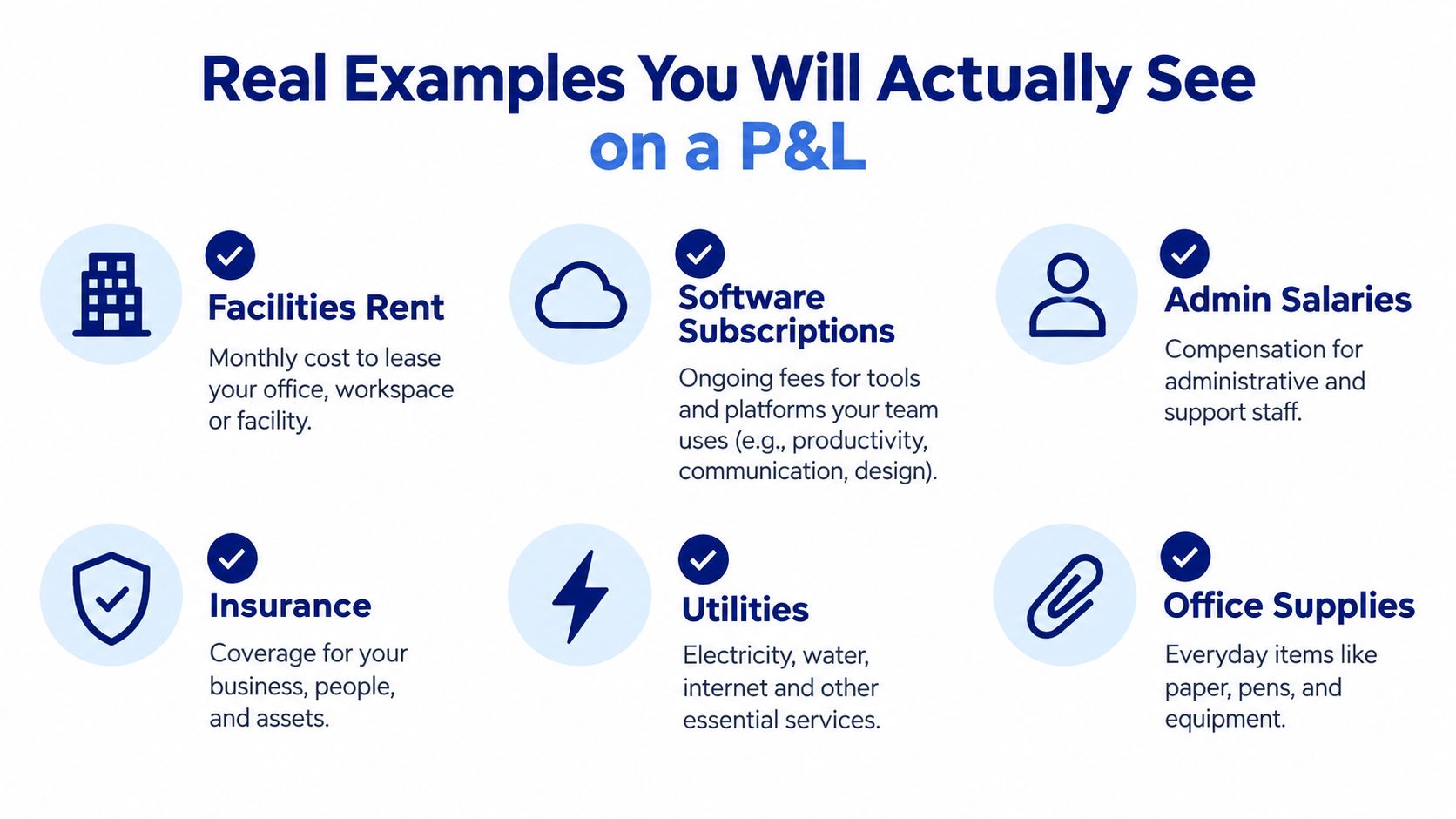
Take a straightforward startup P&L. The company records revenue from customer contracts. It subtracts direct delivery costs, such as project labor or purchased materials, to arrive at gross profit. At that point, the company still has to pay for the office, internal finance support, insurance, software, utilities, and other operating overhead.
Those expenses don't reduce gross profit under this convention. They do reduce operating profit. Interest, taxes, foreign-exchange losses, impairments, restructuring charges, and other non-operating items may then reduce earnings further before the company arrives at net income.
The math is simple:
The labels get messy because companies draw the line differently. Some call all post-COGS expenses below the line. Others call only the post-operating items below the line. The arithmetic doesn't change, but the interpretation does.
Two companies can have the same gross margin and very different net income. One may run a lean back office with modest facilities and administrative costs. The other may have a larger internal team, expensive software, heavier insurance, or substantial interest expense. Their production economics look similar. Their capital allocation and overhead discipline don't.
That's why the P&L alone isn't enough unless the presentation tells the reader where the line sits. A practical guide to understanding a profit and loss statement can help non-accountants read the sequence, but your internal reporting still needs its own documented convention.
The correct takeaway isn't “everything below gross profit is bad.” It's that gross profit measures delivery economics, while below-the-line analysis shows what the rest of the company consumes. Confuse those jobs and you'll cut productive spending while leaving the actual burden untouched.
The usual suspects are easy to spot. Facilities rent supports the business but doesn't become part of a customer's delivered product. Administrative salaries keep the company operating, but they aren't automatically direct production costs. Insurance, utilities, bookkeeping, office technology, and software subscriptions usually sit in the indirect-cost conversation under the broad convention.
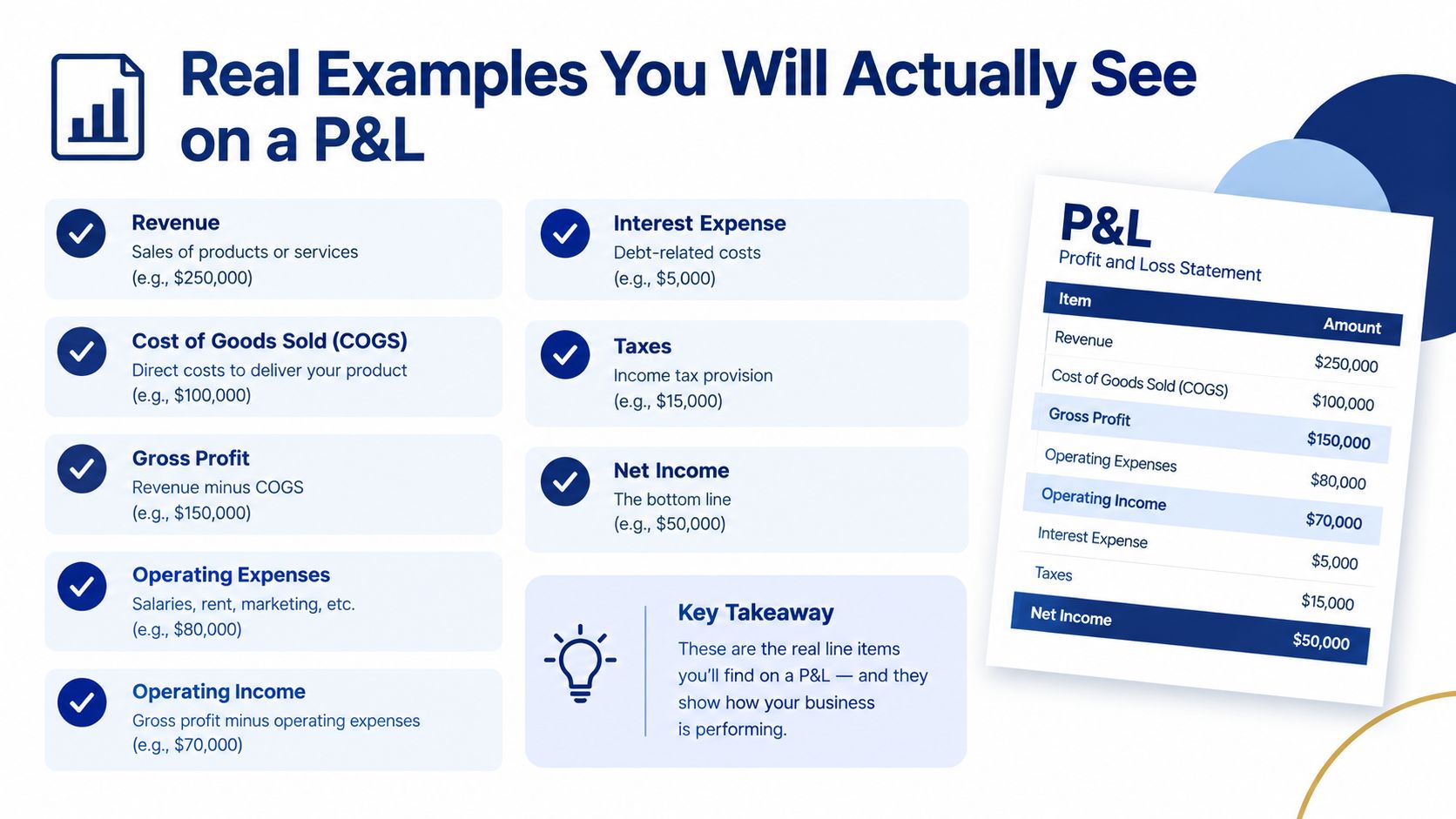
The fastest way to classify an expense is to ask whether you can trace it directly and economically to a specific good, customer delivery, or project. If the answer is no, it's a candidate for indirect overhead. That doesn't make the cost wasteful. It tells you which margin should carry it.
A construction company offers the cleanest example. Labor and materials permanently installed in a job are direct costs because they become part of that completed project. Rent and bookkeeping are indirect because they support the company but don't become part of the building. A business financial health guide from Allied Tax Advisors provides useful context for reviewing these relationships across the wider P&L.
Other categories need more judgment:
Pull the chart of accounts and inspect the expenses that move margins most. Don't accept “that's how we've always coded it” as an accounting policy. Ask whether the cost is traceable, whether the treatment matches the business model, and whether the same rule was used last period.
The biggest danger is inconsistent treatment across teams. Sales may treat implementation staff as overhead while operations treats them as delivery labor. Finance may classify customer-specific software as general administration because the vendor invoice is paid centrally. The resulting gross margin looks precise, but it's built on sand.
The useful question: If this expense disappeared, would a specific customer delivery stop, or would the company still be able to deliver while losing support capacity?
Use the answer to inform classification, then document exceptions. You're not trying to produce a philosophical masterpiece. You're trying to keep margins comparable and decisions defensible.
The narrower finance interpretation starts below operating profit. Under that view, the company first calculates revenue, COGS, gross profit, and operating expenses. Operating profit, often discussed as EBIT, then becomes the starting point for the bridge to earnings before tax.
The bridge typically includes interest expense, interest income, foreign-exchange gains or losses, impairments, restructuring charges, asset-disposal gains or losses, investment gains or losses, fines, and taxes. These items may not describe the recurring operating engine, but they still affect reported earnings.
A clean management report separates the stages:
| Reporting stage | What it answers |
|---|---|
| Gross profit | Does the company make money after direct production or delivery costs? |
| Operating profit | Does the operating model support the overhead required to run it? |
| Earnings before tax | How do financing and other non-operating items affect performance? |
| Net income | What remains after taxes and all reported gains or losses? |
An impairment can reduce reported earnings without an immediate cash outflow. Interest, by contrast, is recurring cash leakage tied to the company's capital structure. Treating both as one undifferentiated “below-the-line” number gives the board less information precisely when it needs more.
The income statement preparation resource is useful for getting the basic structure right. Your management pack should then add the tags that statutory presentation often doesn't make obvious: recurring or nonrecurring, cash or noncash, controllable or externally driven.
Founders routinely use gross margin to judge a problem that really lives in operating margin. They see strong delivery economics and assume the business is healthy, while rent, administrative hiring, software sprawl, and financing costs erode the result.
The reverse also happens. A one-time impairment damages net income, and management responds by cutting recurring operating capacity. That's how a company “fixes” a noncash event by weakening the business that still has to generate cash.
Recent analysis of the 1,000 largest U.S.-headquartered public companies found that median SG&A rose from 13.7% to 14.3% of revenue, while 62% saw SG&A increase as a share of revenue and 78% failed to keep cost growth below inflation, according to the reported SG&A analysis. The lesson for a startup isn't to copy a public-company benchmark. It's to watch whether the support structure is expanding faster than the revenue base.
| Sector | Typical SG&A as % of revenue |
|---|---|
| Manufacturing | 10%–25% |
| Retail | 20%–30% |
| Professional services | 25%–40% |
| Software and SaaS | 40%–60% |
These ranges vary by sales model, staffing needs, customer-acquisition intensity, and technology investment. Use them as context, not as a target you can paste into a budget and call strategy.
Mixing recurring overhead with one-off charges is one of the fastest ways to produce a board deck that looks tidy and says very little. A monthly administrative salary is a run-rate commitment. A restructuring charge may be painful, but it shouldn't automatically define the cost base you expect next month.
The distinction matters because below-the-line items can include expenses excluded from gross profit or operating profit while still reducing net income. The analysis of non-operating expenses and below-the-line classification specifically identifies interest, taxes, foreign-exchange losses, impairments, and restructuring charges as examples.
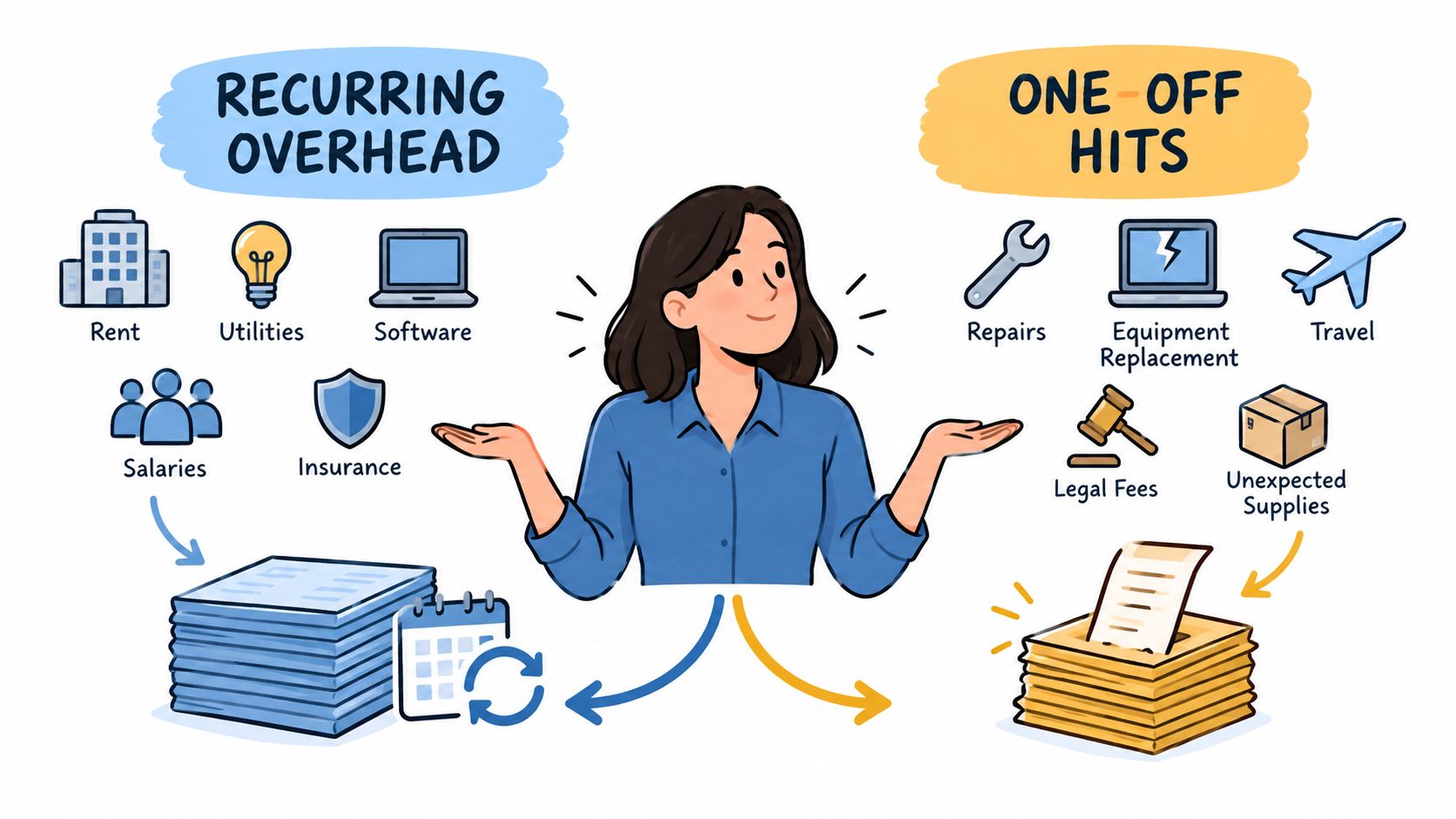
Every material item should carry three practical tags:
That tagging prevents lazy conclusions. An impairment may lower earnings without an immediate cash outflow. Interest expense may recur every reporting period and drain cash even when operations perform well. A restructuring charge may be unusual, but the underlying staffing decision can still affect future payroll.
Use gross margin to evaluate direct delivery economics. Use operating margin to judge whether the company's operating structure is proportionate to its revenue. Use EBITDA only when its adjustments are clearly disclosed and relevant to the decision. Use free cash flow when liquidity, debt service, or runway is the actual concern.
Don't use EBITDA to comfort yourself about interest when the lender wants cash repayment. Don't use net income to judge a recurring support function after a one-time impairment. And don't call an expense “exceptional” just because it's inconvenient. A cost that keeps returning has introduced itself as recurring.
For a separate explanation of operating income and the costs that sit around it, the LendingXpress NOI guide can help clarify the distinction. The important discipline is internal: maintain a reconciliation from EBIT to earnings before tax, explain meaningful variances, and show how each item affects the forecast.
“Below the line” is not a fixed accounting category. It is a reporting-purpose choice. The line belongs wherever it gives the reader a useful answer, and that answer changes for operators, lenders, investors, and founders.
Companies create trouble by sending one blended P&L to every audience. The result is predictable: each reader asks a different question, then disputes the classification instead of discussing performance. Existing explanations assign at least two materially different meanings to below-the-line cost, so your convention must be written into the reporting policy rather than passed informally between finance hires.
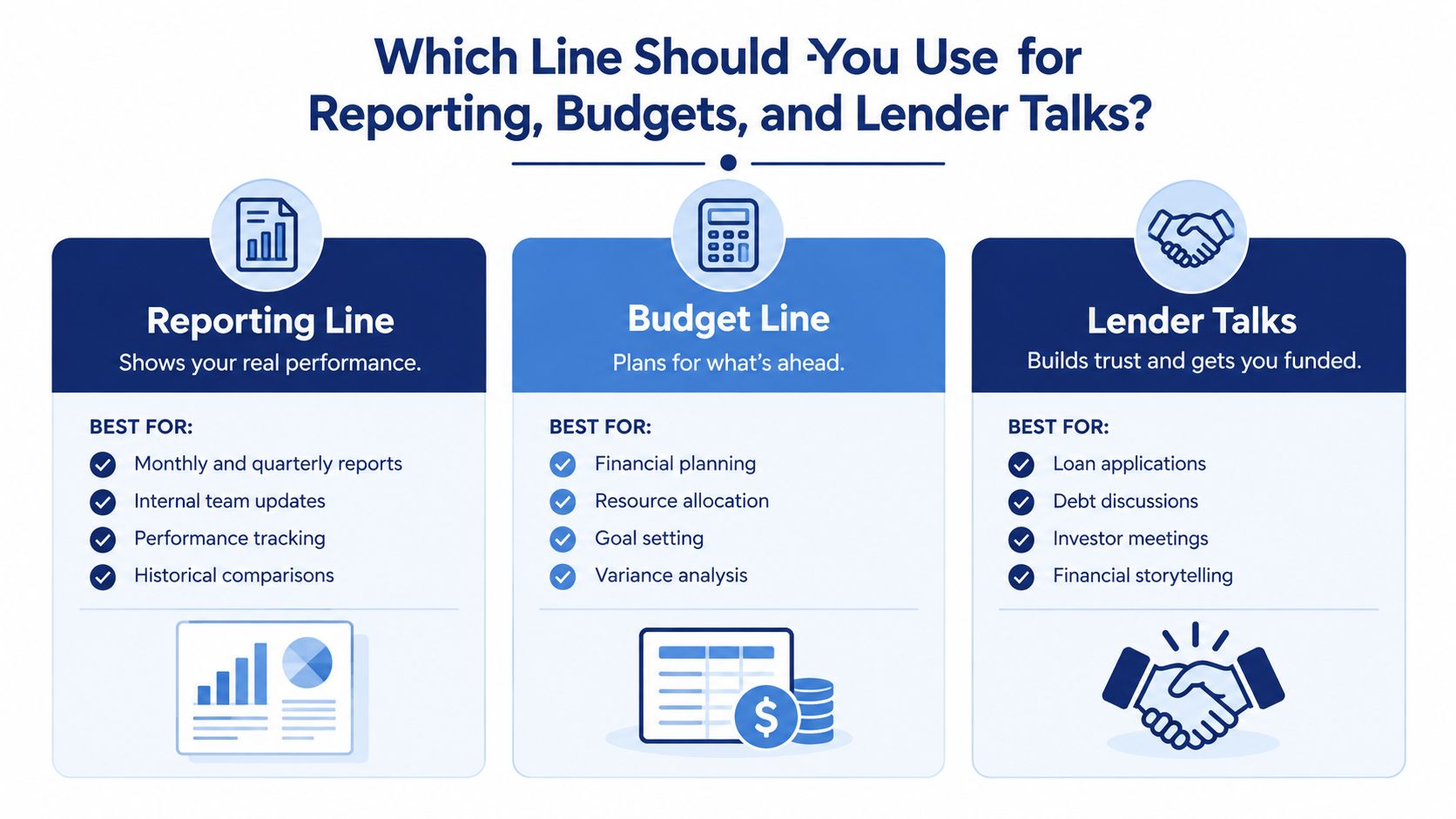
Contribution-margin reporting puts COGS on one side and the remaining costs on the other. Use it for pricing, customer economics, project selection, and delivery capacity. It shows whether incremental work contributes enough before the wider support structure is funded.
Operating-profit reporting separates operating expenses from financing costs and taxes. Use it for the annual budget, board reporting, and lender talks. It shows whether the operating model can carry its overhead before capital structure and tax effects enter the discussion.
Normalized-earnings reporting separates recurring costs from exceptional events. Use it for investor updates, acquisition discussions, and forward-looking planning. It shows which costs the business is likely to carry into future periods.
These views should coexist. They are not interchangeable.
Classify labor according to the economics of the work, not the employee's department or title. A customer-success manager is overhead for a product company but direct delivery labor for an agency selling managed support. The same role can sit on different sides of the line because the revenue model changed.
Put the rule in the chart of accounts, train managers to apply it, and review exceptions during close. If the work is customer-specific and measurable, track it with delivery costs. If it supports the company generally, treat it as operating overhead. Consistency matters more than winning an argument over one month's margin.
Lenders focus on repayment capacity, covenant definitions, and predictable operating performance. Give them a bridge that separates operating profit, financing costs, taxes, and unusual items. Show the internal view beside the lender view when definitions differ. If your ratio includes rent while a covenant excludes it, label both calculations rather than forcing one number to serve two purposes.
For broader context on how classification conventions can vary, see the discussion of inconsistent accounting classifications.
The three-line rule is straightforward: use contribution margin for operating choices, operating profit for budgets and lender discussions, and normalized earnings for forward-looking judgment. Document the basis each time. A clean report does not hide costs. It prevents different readers from mistaking a reporting convention for an economic fact.
Below-the-line reporting becomes useful when it survives the monthly close. Keep the routine simple enough that a real finance team will follow it after a bad week.
Start with four controls:
That last ratio is a management tool, not a universal accounting answer. Track it over time and compare it with operational changes, such as hiring, facilities decisions, outsourcing, software purchases, and financing activity. Resources on how to improve cash flow with ratios can help connect the accounting view to liquidity decisions.
Ask whether the ratio moved because revenue changed, indirect costs changed, or classification changed. A reclassifying exercise can make a trend look better without changing the economics. That's not cost control. That's rearranging the furniture while the roof leaks.
Also keep the marketing meaning separate. Below-the-line marketing refers to targeted or direct activities such as direct mail, trade shows, sponsorships, merchandising, and in-store displays. It's a marketing classification, not automatically a below-the-line income-statement expense, as the explanation of below-the-line advertising makes clear.
For the calculation mechanics behind common management measures, use this guide to financial ratios and formulas. The aim isn't to erase below-the-line costs. It's to show which costs support delivery, which sustain the operating machine, which consume financing capacity, and which belong to a one-time event.
HireAccountants can help you keep that discipline in place with bookkeeping, reconciliations, month-end close, US GAAP financial statements, and management reporting support. If your team needs a pre-vetted accountant or finance professional to classify costs consistently and maintain the reporting views above, visit HireAccountants and match the role to your operating needs.
Let's simplify your finances today!